


If content design is as crucial to user experience as we believe, how is it possible to build an entire ecosystem of digital products without dedicated content designers?
That’s the question we asked ourselves two years ago, when we published our first article on the emergence of content design in China. At the time, we learned that content design was not completely absent in China, but was rather emerging, practiced mostly by companies operating internationally.
Content designers had to face increasing challenges in showing their impact, making their role understood by their organization, and distinctive from their localization peers.
Since then, we’ve formed Content Designers China, a community with several hundreds of members – both practitioners and enthusiasts, hosted over 20 online and offline meetups, and facilitated the first dedicated content design workshop in China.
Now, we’re back to answer that same question again, with new data from 70+ content professionals across Shanghai, Beijing, Hangzhou, and beyond. This report builds on our original findings to validate what still holds true—and uncover what’s changed.
We’ll explore how large Chinese tech companies are now hiring Content Designers—especially for global products, how these roles are structured and who they collaborate with most, why career paths remain unclear despite rising demand, how AI is transforming daily workflow, and why, even today, organizational awareness remains the biggest barrier to impact.
Where do content designers in China work?
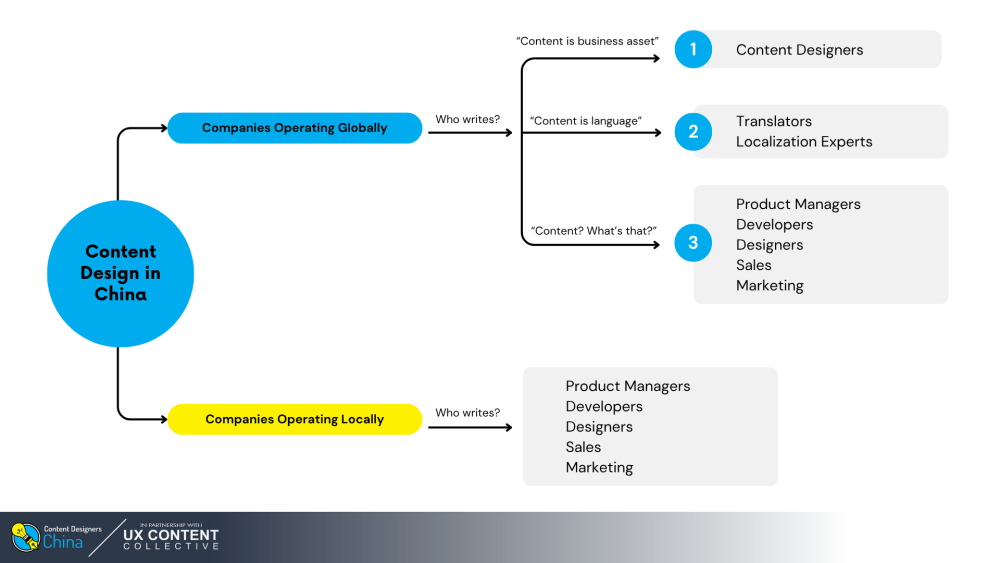
Most Content Designers work in large enterprises headquartered in China that serve international markets with their lifestyle/ecommerce digital products.
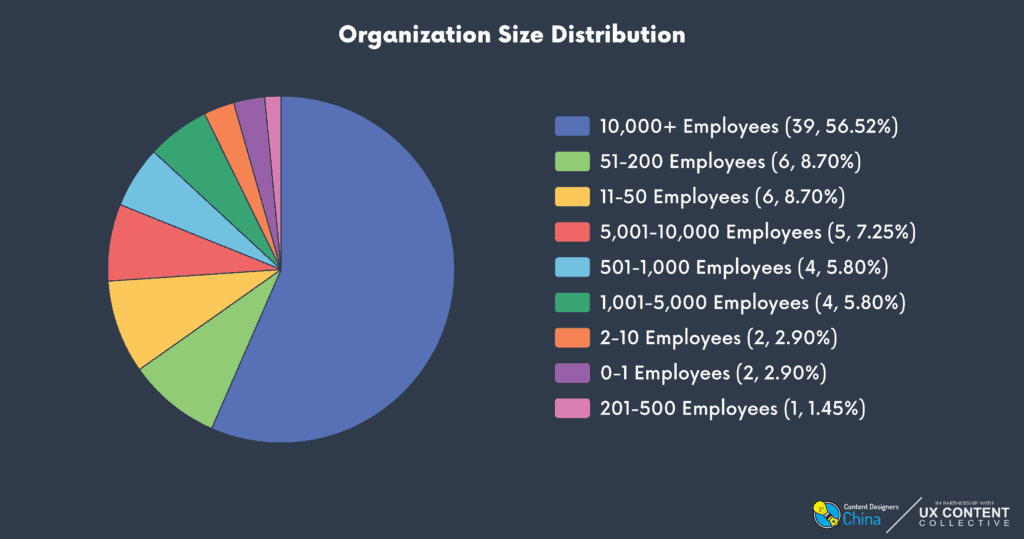
With a sample size more than twice bigger than the survey we did back in 2024, we can clearly see that Content Design is more likely to be found in large enterprises. 63.77% of our respondents reported working for enterprises with over 5000 employees.
It exceeds the results of Torrey Podmajersky’s Content Design Skills survey (2023), where the majority of 43% of respondents reported working for enterprise corporations, and Yuval Keshtcher’s Writers in Tech Salary Survey Report (2024) where nearly half of the respondents reported working with companies with 1000+ employees.
Statistically speaking, large enterprises are more likely to be international and target their products to a wide range of consumers.
That is true for our study as well: Internet/Social Media (32.86%) and E-commerce/Retail Tech (28.57%) seem to be the leading industries that hire Content Designers, collectively representing 61.43% of all respondents.
Localization/Translation Agencies and Hardware/Consumer Electronics are the next largest segments, each accounting for just over 8.57% of the total sample, closely followed by Gaming with 7.14%.
Interestingly enough, neither Hardware nor Gaming were represented in the 2024 survey, reflecting the need for content design as these industries expand into international markets.
Indeed, Chinese gaming companies achieve international success, selling millions of copies of titles like Black Myth: Wukong and Genshin Impact. At the same time, consumer electronics such as Dreame vacuum cleaners are experiencing significant global expansion.
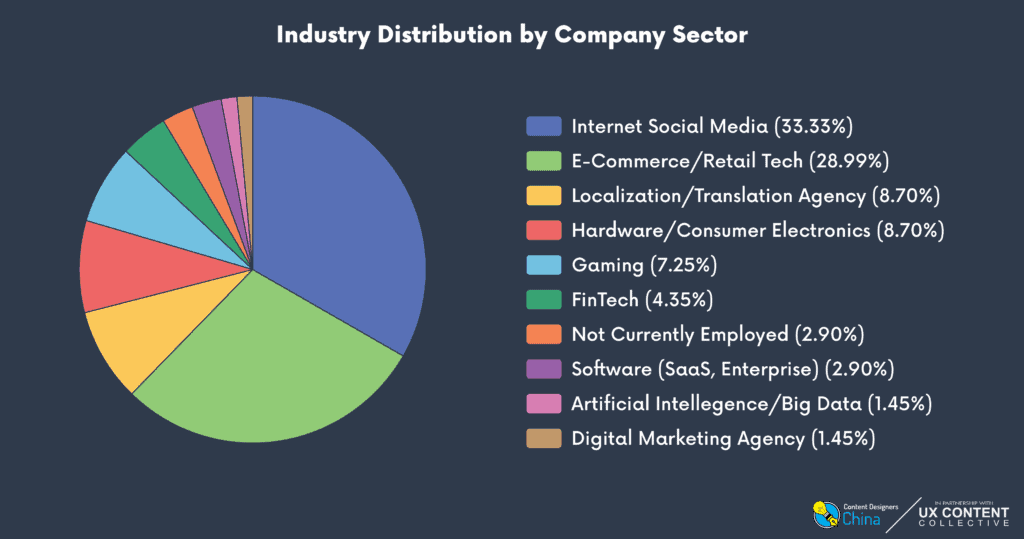
Q3, Which industry does your organization belong to? Please select the one that fits best (N=70 ; n=70)
The majority of our respondents (68.6%) report working for China-based companies operating internationally. This aligns perfectly with our earlier observation that content designers are frequently found in large, China-based enterprises with an international market focus.
Following this, 25.7% identify as working for international companies focused globally; they might be working on adapting digital products for the Chinese market.
A very small proportion, just 2.9%, work for China-based companies focused solely on the domestic Chinese market. This further reinforces the idea that international market penetration is a key driver for employing Content Designers, continuing a trend that we observed 2 years ago.
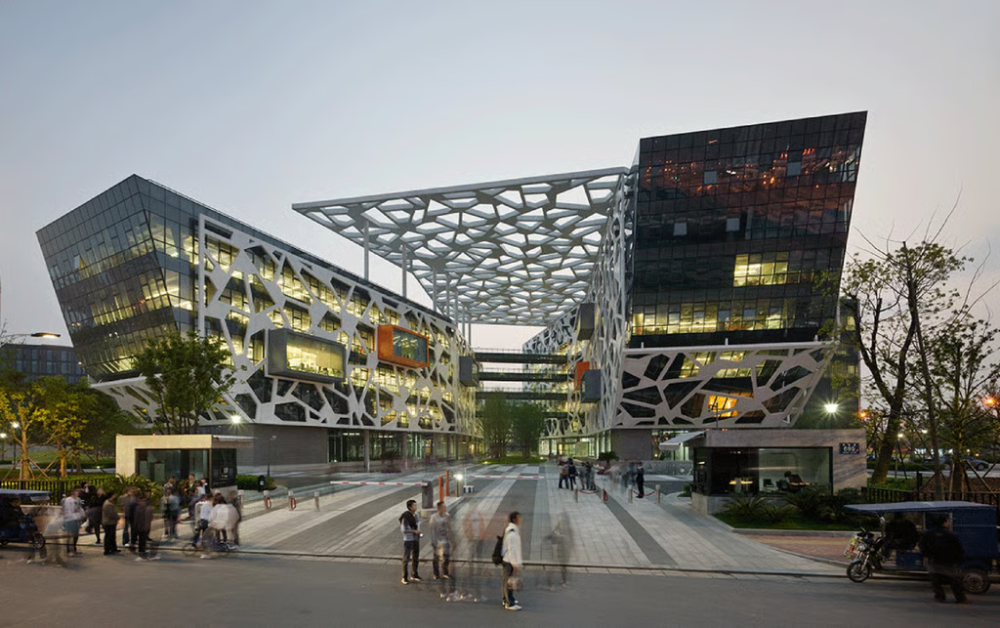
Alibaba Group Holding’s 150,000-square metre headquarters in Hangzhou. Photo: Handout
What’s the typical persona of a content designer in China?
Content Designers live in big cities, fluent in English, and mostly identify as women.
Our respondents are concentrated in Shanghai (38.57%), Hangzhou (24.29%), and Beijing (17.14%). This concentration might have to do with the fact that those cities are economically developed, which attracts large enterprises that tend to hire content designers. Based on Camila Martins’ Brazilian UX Writers’ Snapshot 2023, we can observe a similar situation in Brazil, where three major cities (São Paulo, Minas Gerais, and Rio de Janeiro) host 71% of content designers.
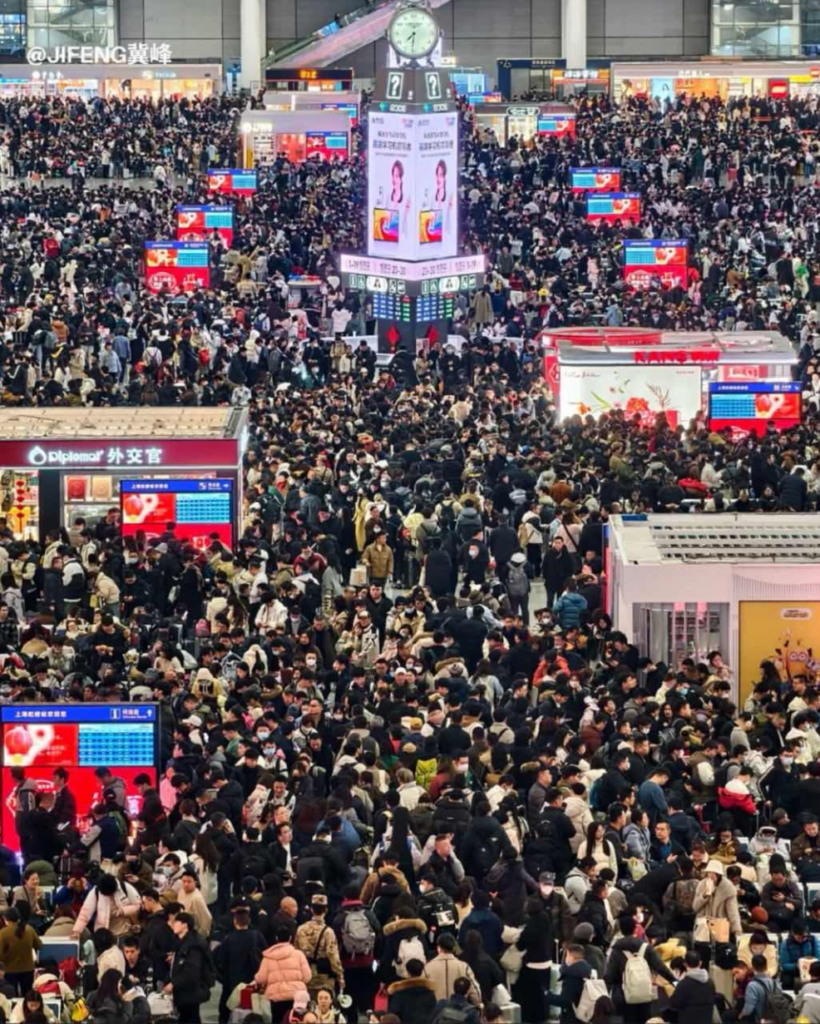
A railway station in Shanghai during Chinese New Year break, Feb 2026. Photo: RADII Media.
Since Content Designers mainly work for Chinese companies targeting overseas markets, it’s natural that most of them are comfortable using English in daily communication.
In this survey, 61.42% of respondents chose English as their preferred language, while 38.57% preferred to fill it in with Chinese.
In China, content design presents as a field that is rather balanced, with a slight predominance of women. 55.07% of participants identify as women, compared to 42.03% who identify as men. This seems to align with a broader global trend; the Writers in Tech Salary Survey Report 2022 indicated that 75% of international respondents were women. 1.45% of survey participants identified themselves as Gender Diverse or preferred not to share this information.
What’s their original background, and what are their future career plans?
While most Content Designers are experienced professionals with stable roles, only one third plan to remain in UX writing.
Surveyed Content Designers in China are predominantly mid-to-senior professionals: 82.9% have 3+ years of experience in their current role. Interestingly, 47.1% are senior or highly seasoned (6+ years), including 27.1% with 10+ years of experience and 20% with 6-9 years of experience.
This shows that in the eyes of our respondents, content practices have been around in China for several years already – perhaps even before the term “content design” came around. No doubt the discipline must have evolved through their long careers and that they have witnessed it grow and gain new practitioners.
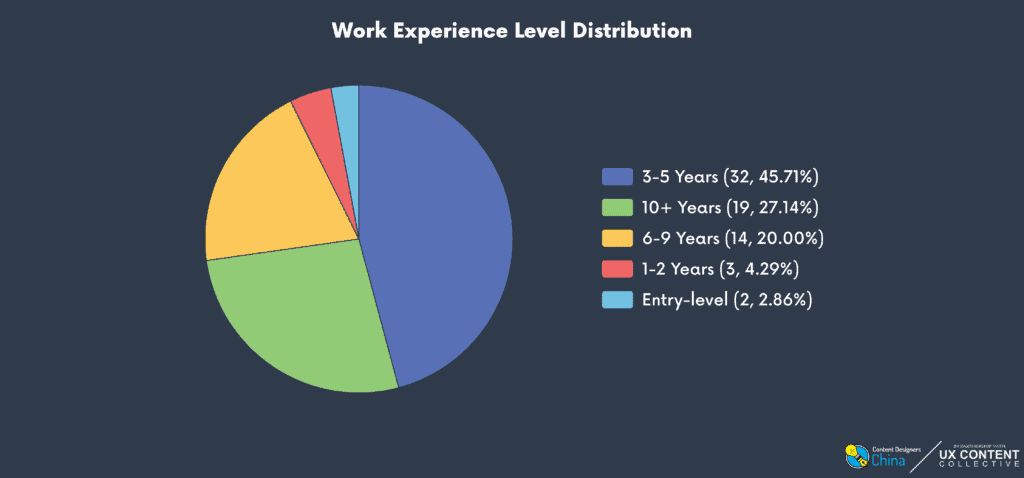
Q5, What is your current work experience level in your current role? (N=70 ; n=70)
On another question, we learned that 35.9% of our respondents were practicing translation/localization before moving into content design – no doubt that some of them still practice it in some form – and 17.9% used to be in marketing before transitioning.
When it comes to job stability, China’s market appears relatively steady: a majority of respondents (85.3%) remained in the same job over the past 12 months, with only 7.4% leaving their positions (voluntarily or involuntarily). Professionals in North America and Europe faced greater turbulence: 24% of UX writers and Content Designers reported experiencing layoffs in the previous 24 months, according to a 2025 salary survey by UX Content Collective.
While China’s market shows no current signs of massive layoffs currently, it also reflects limited growth: only 4.4% of respondents entered the industry within the past year.
Yet, their future paths are diverging in three potential ways. While 28.4% plan to advance within UX writing—either as senior individual contributors or team leads—37.3% aspire to transition into broader roles within the UX industry, as Product Manager, UX Researcher, or design leadership (Q24). Notably, 25.4% remain undecided, suggesting thoughtful deliberation rather than uncertainty.
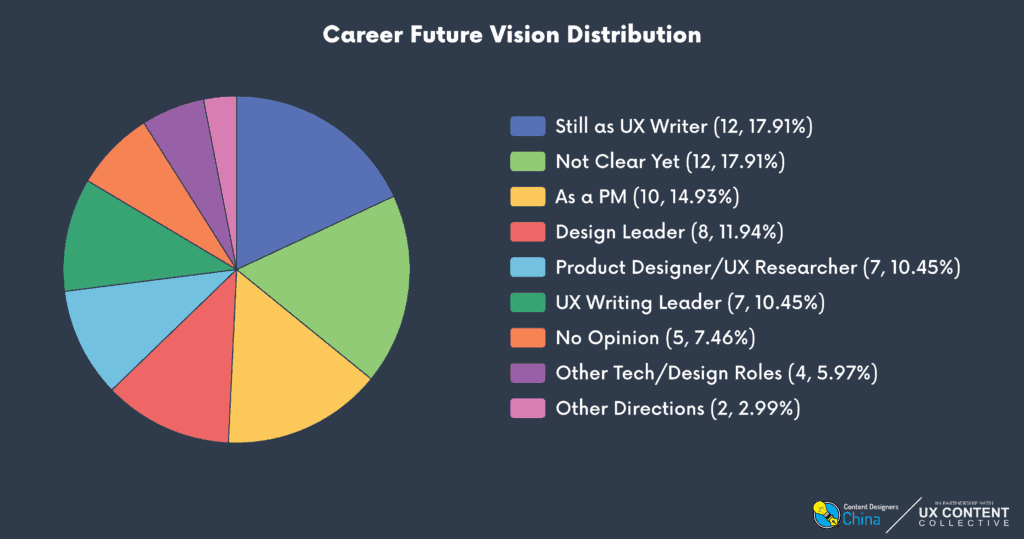
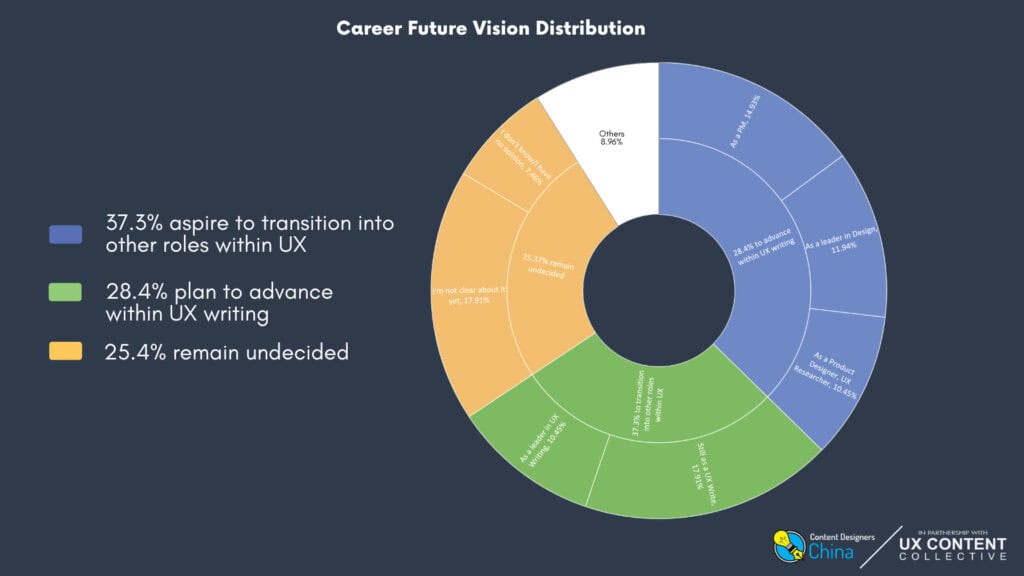
Q24, When thinking about the future of your career, how do you see yourself? (N=70 ; n=67)
Those results align with what has been observed in other markets, such as North America and Europe, where one third of respondents have positive industry sentiment, while around one third have negative, and the last third have neutral sentiment, according to the Content Design Salary Survey done by UX Content Collective in 2025.
Content design remains an emerging discipline in China – at least in the way it is currently practiced. It is possible that after spending a few years in content design, respondents wish to grow in their career – either in the UX field or elsewhere – but lack the guidance to reach that goal.
What’s the average salary of a content designer?
Content Designer’s Salary is higher than the national average, but a gender salary gap exists
When it comes to the salary, the majority of respondents for this question earn between ¥30,001–40,000 RMB/month—a range that also represents the median. It is important to mention that among the 70 Content Designers surveyed, just 61.4% disclosed their salary, so our pool of respondents is even lower, and those results should be taken with a pinch of salt.
It is also important to mention that those salaries are much higher than the average of Chinese first-tier cities (where most of our respondents are located), which stands at around 20,000 RMB/month (Statista, 2024 – Average annual income of employees working for urban non-private units in China in 2024).
Compensation rises significantly with experience: professionals with 10+ years earn an average of ¥47,500, nearly double early-career salaries.
A notable gender pay gap exists, with men averaging ¥36,818 versus women at ¥31,500 (~17% difference).
Industry plays a key role: FinTech and Internet/Social Media companies offer the highest pay (¥40,000–45,000K), while E-commerce, Gaming, and Localization agencies lag behind (¥28,000K–30,000K).
Where are they positioned within their organisation? How big is their team?
Content Designers mostly work in teams, not solo, but their teams may be too small for the number of tasks. Impact measurement, though happening often, isn’t always consistent.
Content designers in China operate within well-established, collaborative environments. 35.7% work in teams of 2–10 content professionals, while 24.3% are in teams of 11-50 members, and 18.6% in teams of 50+ members. In China, based on our respondents’ answer, content design doesn’t seem to be much of a solo or even freelance job, and most content designers are embedded in teams, which themselves are part of a bigger organization.
Even 2 to 10 Content Designers organized in a team reveals that organization understands some of its value – at least to have them organized in a team. However, 2 to 10 Content Designers taken in the context of a large organization (10,000+ employees) indicates that Content Designers may be serving multiple stakeholders at once, a challenge that they share with their international counterparts.
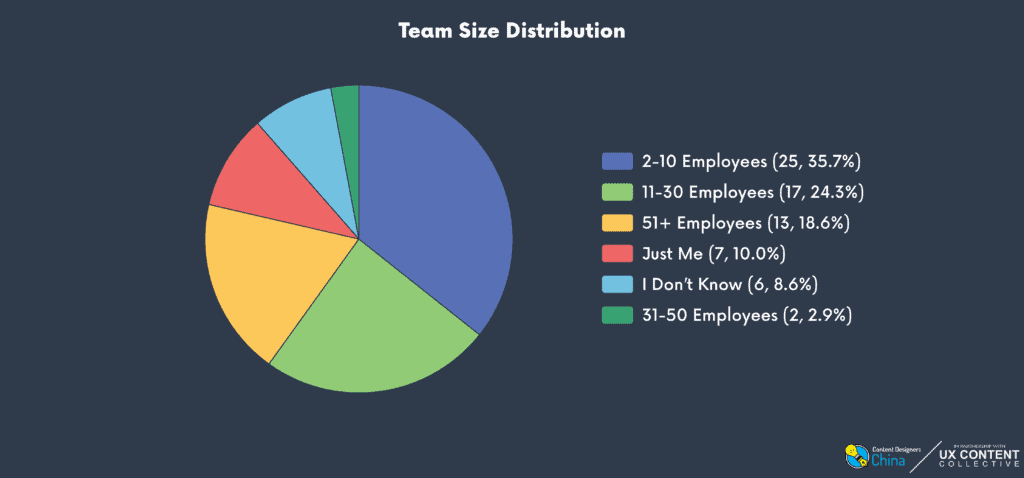
Q8. Approximately how many people in your current or most recent company share your job title or a similar role (including yourself) (N=70 ; n=70)
This is confirmed by the following results: 78.6% work closely with Product teams, and 71.4% collaborate regularly with UX/UI designers. Other teams also frequently collaborate with: Localization specialists (57.1%), other content designers (52.9%), and Developers (51.4%).
Those results align with what has been observed in other markets like North America and Europe, where top 3 collaborators are (1) product designers, (2) product managers, (3) UX or product leaders (Content Design Salary Survey, by UX Content Collective).
This reflects their role as strategic connectors rather than isolated writers: content designers truly work across the organization, often playing the role of ‘middle platform’. It indicates a high demand for Content Designers within their organization, with a total of 98 responses for 70 respondents, and an average of 1.4 team collaborating per Content Designers.
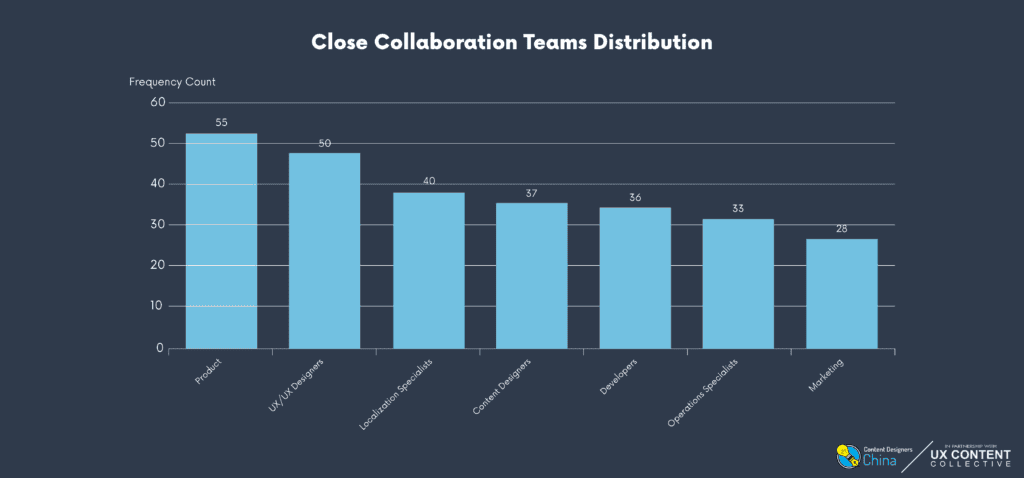
Q21, Which of the following teams are your close collaborators? – Please select all that apply (N=70 ; n=98)
Critically, most Content Designers have a way to measure their impact — 81% report their work is evaluated via conversion metrics, user satisfaction, or cross-functional feedback. But 18.1% do not have formal measurement, or do not know how to answer that question – indicating a potential gap into how to show their impact within their organization, a challenge that they share with Content Designers from around the world.
This data paints a picture of practitioners who are institutionally embedded, cross-functionally fluent, and operating at the intersection of user experience and business performance. However, some gaps may appear here as well: too few content designers serving too many teams, and a lack of practical way to measure their impact. Future research is required to see how frequently they measure the impact of their work, and which of those metrics are most commonly used.
What do Content Designers work on?
Content designers often work on various content types other than UX writing, creating copy primarily in English. Just like their international peers, they are skilled in content critique, UX writing, content inventory & audit.
Since most surveyed employees work for Chinese global firms, 71% create content in English to help reach overseas markets. A new development we are observing is that 24.3% selected Chinese as their primary language. This roughly correlates with the number of people who work for international companies targeting the Chinese market.
Regarding ownership, half (49.28%) of our participants own microcopy deliverables. Another 15.94% attribute content creation to product managers, and 10.14% to UX designers. A further 7.25% indicated that the marketing team manages content, which makes sense, as some content teams in this study report to marketing.
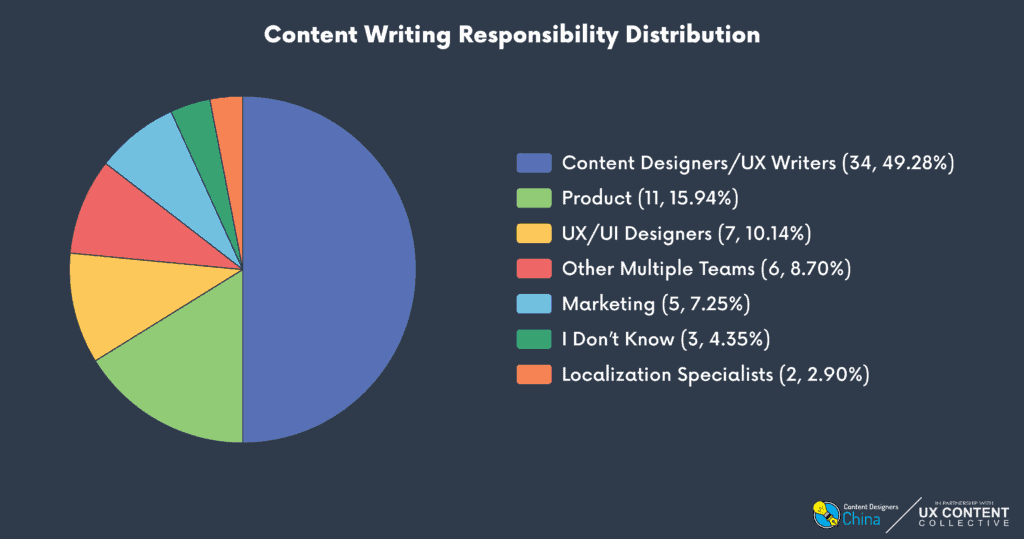
Q13, In your organization, who is responsible for writing content for digital products, i.e. for the interface?
Content designers in China tend to be generalists, expected to handle various types of content beyond just products. 50% sometimes deliver content for marketing, internal communication, social media, and other areas in addition to UX writing, and 31.4% have primary responsibility for all content types.
Think about it. 8 out of 10 Content Designers in China write marketing copy often or sometimes. This appears to be a trend not just for China, but for North America and Europe as well.
In Ademola Adepoju’s analysis of 100 job postings for content design roles, we see 48% mentioning collaboration with marketing as a job requirement, suggesting a very blurry line between UX and marketing. Covering both areas can offer diverse career opportunities, but may also mean fewer opportunities for deep specialization in UX writing for those who desire it.
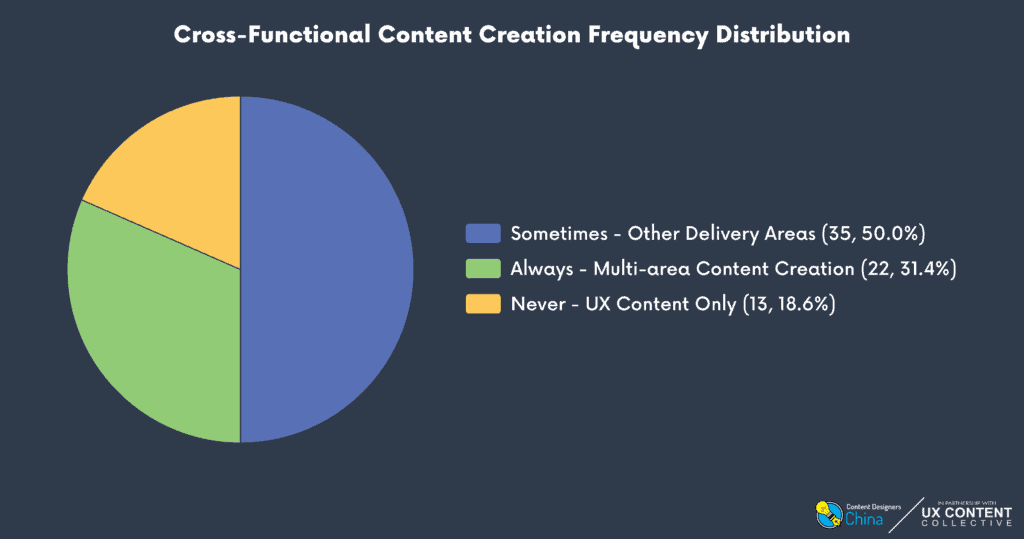
Q14: How frequently do you create content for functions other than UX in your current role?
The highest-scored skills are content critique, UX writing, glossary maintenance, content audit, and voice and tone definition. The first three of these are also present among the top-scored skills in Torrey Podmajersky’s Content Design Skills survey (2023), demonstrating that core skills and responsibilities are consistent worldwide. Content modeling, workshop facilitation, and wireframing ranked the lowest.
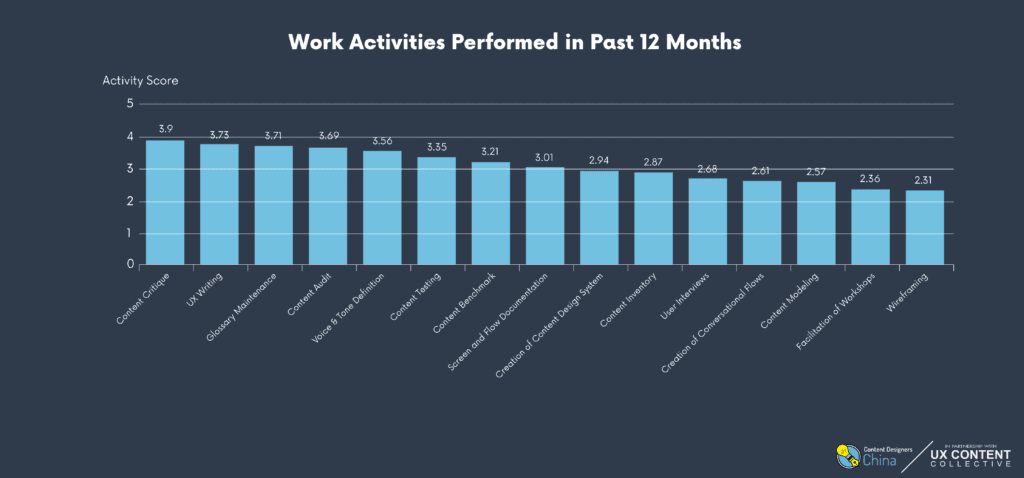
Q15: In the past 12 months, have you performed any of the following activities in any of your roles?
As they practice content design, what are their main challenges in their daily work?
Companies often don’t realize the importance of content design. This makes it hard for content designers to get support, resources, and advance their careers.
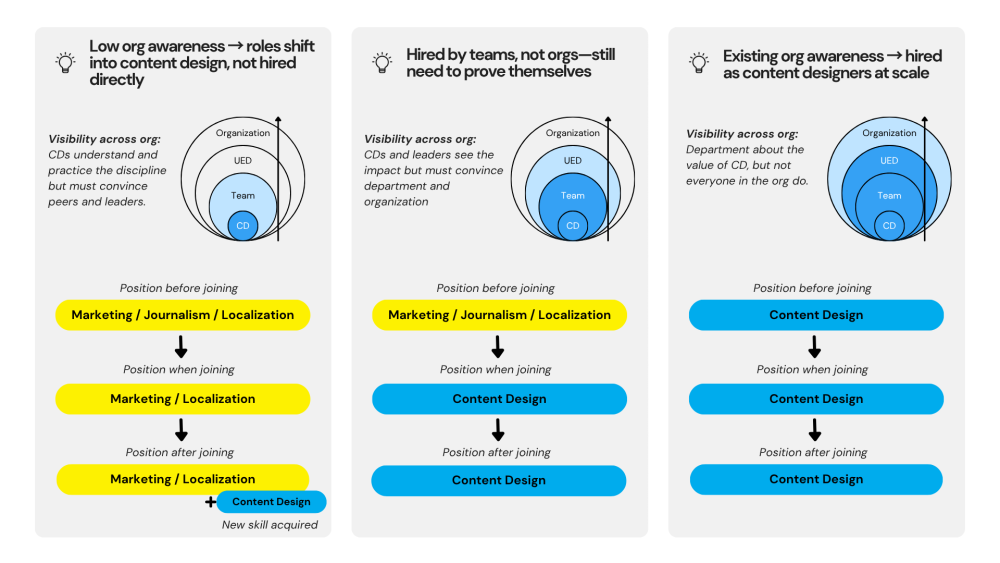
While content design is an established field, 55.7% of practitioners still cite “lack of understanding of its value” as their biggest challenge. The reason might stem from how companies initially approach the role: many first hire localization experts, marketing managers, or copywriters.
Those professionals, in turn, start advocating for transitioning into content design. They actively develop content design skills and advocate for clearer team positioning, aiming to drive organizational change that improves experiences for international users.
Different levels of organizational maturity call for different approaches to content design: while some of the companies hire content designers directly, others see their localization or marketing team growing into content design.
There is also a stage in between, where initiative to build content design expertise comes from management on department level, and not from CEO or main business leader. In this case, content designers still need to “prove” themself to the rest of the org.
The second highest-ranking challenge is juggling too many projects and priorities simultaneously (45.7%); many people report a lack of access to tools and resources (18.6%).
Because content design isn’t perceived as a core contributor to business goals, it tends to be deprioritized in favor of initiatives that are better understood and valued, resulting in limited headcounts who are spread very thin.
This, in turn, can lead to conflicting timelines and difficulties in collaborating with other teams, as highlighted by 22.9% of participants.
When other departments (design, product, engineering) don’t see the strategic benefit of content, they are less likely to collaborate effectively: 14.3% point to a lack of alignment on goals with other teams.
If content design is deprioritized, there are fewer opportunities for professional development and growth due to limited headcounts. If leadership roles are scarce, it’s difficult to create a structured career progression or provide good educational opportunities for on-the-job learning.
In this environment, career advancements tend to depend more on individual initiative or company-specific opportunities rather than a clear, standardized path.
What is the impact of AI on their content work? What do they think of it?
AI adoption rate is high, sentiment is largely positive, driven by perceived benefits, but there’s also an awareness of potential risks.
When asked about trends impacting content design in the coming years, half of participants (48.8%) chose AI, while 20.0% pointed to personalization, and 16.8% selected collaboration with tech.
The latter two can be understood through the prism of AI as well: working with engineers is important to ensure that AI-generated content meets brand guidelines and quality requirements.
With more AI-generated content available, personalization becomes more achievable than before.
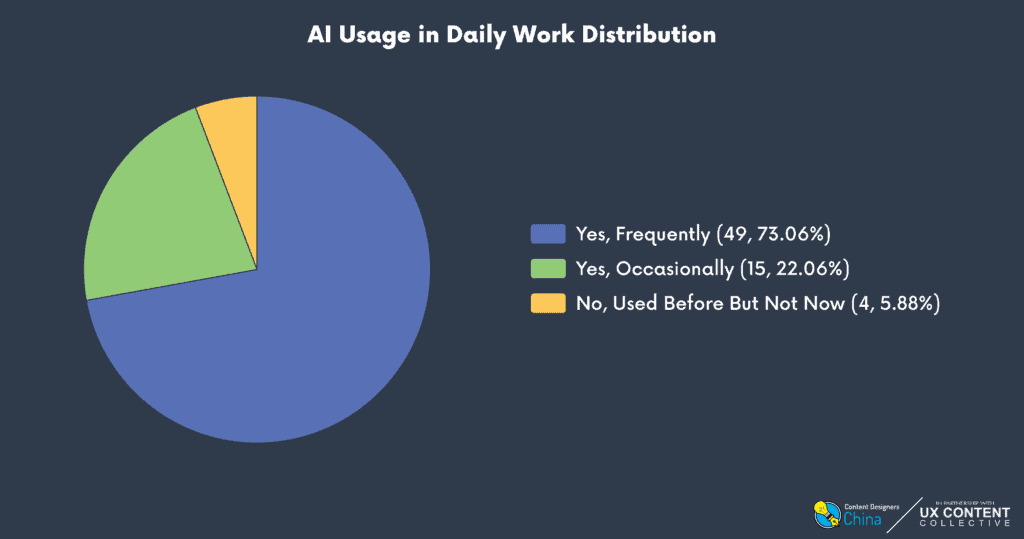
Q28. Have you been using AI in your daily work?
The vast majority of our participants adopted AI in their work. They use it either frequently (72.6%) or occasionally (22.06%).
The main use cases are research, ideation, brainstorming, as well as editing and grammar checks. Some teams are employing AI for data analysis (13%) and developing their own tools (10.5%).
The overall sentiment towards AI is rather optimistic; half of participants associate it with improved efficiency, while 17.24% are cautious about the risks to job security.
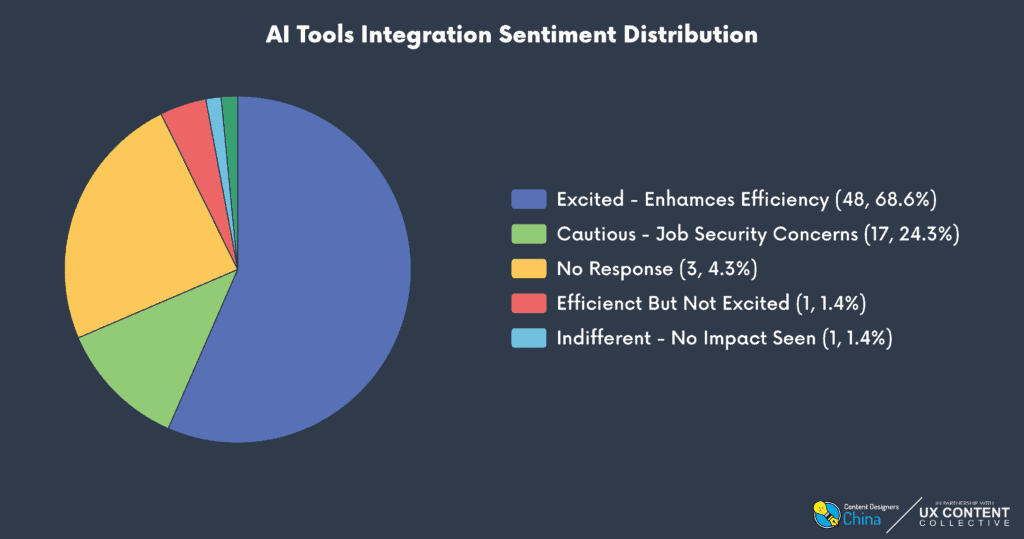
Q27. How do you feel about the integration of AI tools into your work?
This conclusion stands true not only for Content Designers, but for the Chinese workers overall. Chinese respondents’ trust and acceptance of AI are significantly higher than the global average, according to Trust, attitudes and use of artificial intelligence: A global study 2025, covering 48,000 respondents across 47 countries. 58% of global employees actively use AI tools for work, while China’s workplace AI application rate is as high as 88%. That puts China in second place across the 47 countries studied.
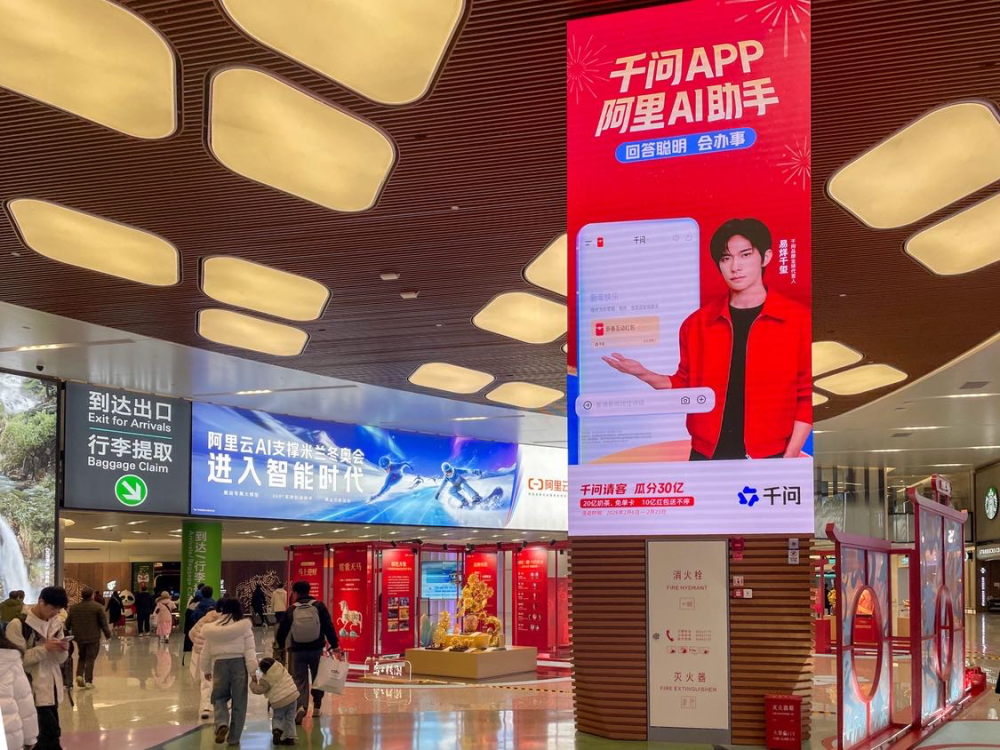
AI apps and cloud solutions advertised in Hangzhou Xiaoshan Airport, Feb 2026. Photo: Anna Potapova
What do they want to learn in priority?
Content designers in China are self-motivated learners, focusing on AI, content strategy, and UX fundamentals, primarily relying on digital resources like online courses and YouTube.
The content design community in this study demonstrates a strong, self-driven appetite for learning, with respondents having studied an average of 2.3 topics each—most commonly AI & LLM, content strategy, and UX design fundamentals.
They rely heavily on autonomous, digital resources: online courses, self-study, and mentorship are equally valued, and YouTube is the dominant learning platform— even among China-based users—followed by local platforms like RED and Bilibili. This underscores a clear preference for on-demand, visual, and globally accessible content, but also a real aptitude to look for and find the resources they need in order to grow.
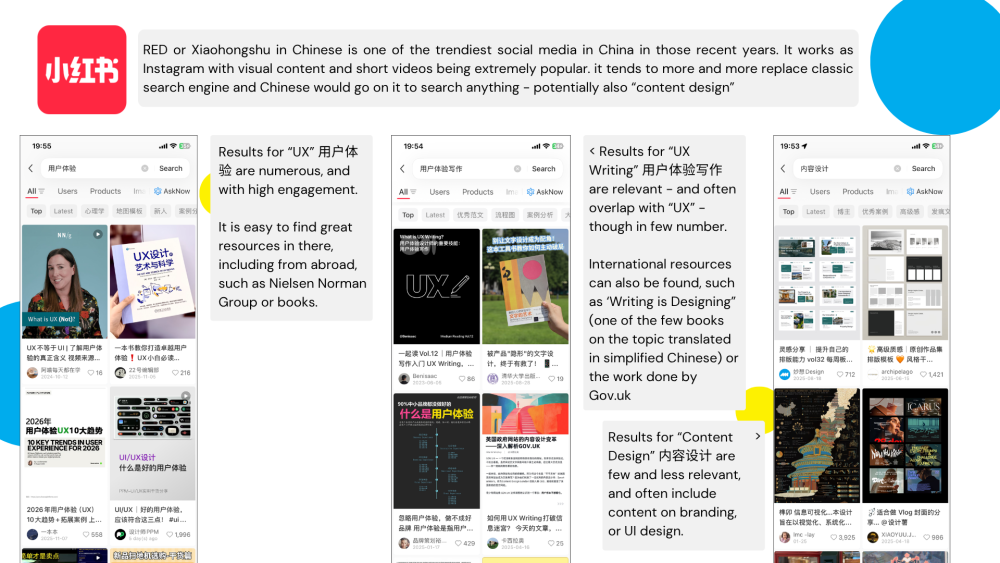
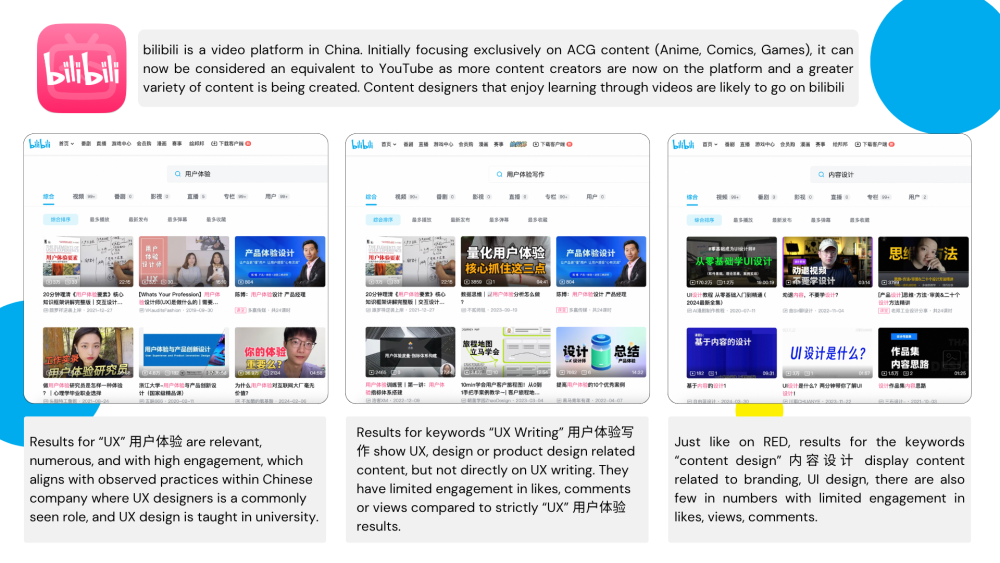
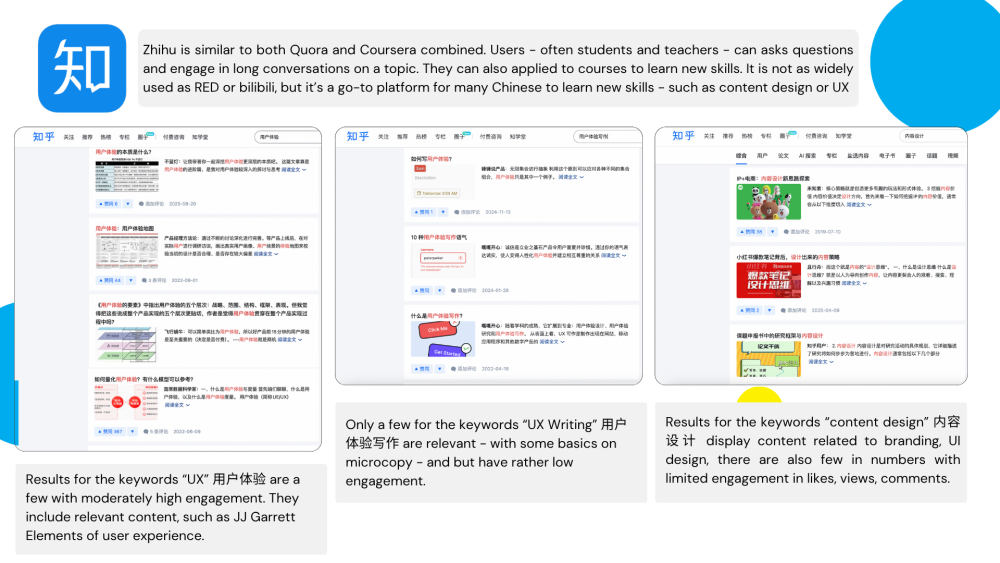
Q20. Where do you usually learn more on content design/UX design/localization/user research? – Please select all that apply (N=70 ; n=129)
Looking ahead, their top development interests center on AI integration (52.9%), data-driven decision-making (47.1%), and proving content’s ROI (47.1% in Q33), revealing that the community is urgently seeking tools to measure value, leverage automation, and influence stakeholders—positioning content design as a data-informed, future-ready discipline.
Conclusion
As discussed in our previous article a few years back, content design in China continues to evolve as an emerging discipline. But our findings this time tend to show that it is operationally embedded primarily within large, internationally focused tech companies.
What we can learn from this study is that practitioners in China are experienced, well-paid, and fluent in global content practices (content critique, UX writing, glossary maintenance, etc).
Just like their counterparts abroad, they face persistent challenges, such as getting a seat at the table, getting involved early in projects, proving the impact of their work, or juggling multiple projects and requests. At the same time, they view AI in a more optimistic way than their overseas counterparts, and are more eager to adopt it at work.
However, unlike other Content Designers, those practicing in China have to contend with limited organizational understanding of content design as a strategic function (often misunderstood with localization or marketing), and unclear career paths, leading many to consider roles beyond UX writing.
The fast-paced nature of the Chinese IT landscape remains the same two years after our first surveys; it is still challenging to advocate for user experience when product and even UX design teams are driven mostly by business metrics and adopt a ‘ship first, decide later’ mindset.
The views and opinions expressed in this article are those of the authors and interviewees and do not necessarily reflect the views or positions of any entities they represent.
Methodology
- The data was collected via survey from Dec 15, 2025 to Jan 20, 2026.
- We received 80+ responses, of which 70 valid were valid to be analyzed, i.e. answers were clear and/or complete.
- We collected feedback from participants based in Greater China.
- Surveys were distributed via WeChat and LinkedIn.
- It included 33 questions and took an average of 15min to complete.
- Industry reports, international content design survey reports were used for reference and comparison where applicable.
Sources
- Business Sizes: Classifications and Characteristics, Indeed.
- Lifetime unit sales of Black Myth: Wukong worldwide as of January 2025, Statista.
- Dreame Technology moves nimbly to expand overseas, China Daily
- Raio-X dos UX Writers Brasileiros 2023 by Camila Martins
- Writers in Tech Salary Survey Report 2024 by Yuval Keshtcher
- Average annual income of employees working for urban non-private units* in China in 2024, by region
- Content Design Salary Survey (2025), by UX Content Collective
- What Do Companies Actually Want from Content Designers in 2026?

Move past single screens to systems, product strategy, and content that scales across teams. For UX writers who want more say in what gets built.
The new basics: questions content designers should be able to answer in 2026
As the year heads into its final quarter (ack), it feels like a good time to take stock of where…
 Oct 2, 2026

Building a content architect role from scratch
In my last article, I wrote about how the content architect role went from a hypothetical future to my actual…
 Sep 7, 2026
Nobody will care that you used AI, but they’ll care if your writing sucks
Content design is about to go through the same separation. AI will produce more and more of the experience. Our…
 Sep 7, 2026