
The craft of content design and UX writing is changing, but the good news? The discipline is still in demand – in a big way.
More companies, including large tech companies, mid-range businesses, start-ups, and even the creators of Large Language Models, want content designers.
Despite a huge shift towards automation, it turns out that not everything can be automated. Craft and taste still matter. And that’s exactly what content designers bring to the table.
Are you interested in joining this discipline? If so, you’re arriving at an exciting time.
Let’s explore what’s happening in content design in 2026, what’s most important to content designers in 2026, and what areas you need to focus on if you want to become a content designers yourself.
What’s changing in content design?
The craft of content design and UX writing is undergoing a pretty big shift. We talked about this a little bit in our Content Design 3.0 post, and more recently, our summary of what’s happening in content design in 2026.
Yes, content designers and UX writers are in charge of user interface text. That means they’re working as part of UX teams, testing users, prototyping, and so on.
But other things have changed as well:
- Content design has widened from UI writing to systems, AI, structured content, and measurement.
- Hiring has matured: there are higher expectations regarding your skills and ability to create change across an organization
- Teams expect operational maturity: influence, prioritization, and cross-functional planning.
This means that if you’re a copywriter, journalist, technical writer, or any other type of writer, transitioning to a content design career means taking on some new skills.
And it also means you may have to think carefully about whether this profession is for you. Creating and managing user interface text is as much about governance and operations as it is craft and creativity.
Does that sound interesting to you? If so, let’s explore some more.
What does “content design” mean in 2026?
The core job of the content designer and UX writer remains the same: create the content that users see.
That requires a whole range of skills, including the ability to write well, to understand feedback, to test content, to work well with designers and developers across a range of different teams.
But it also means understanding entire product systems, shaping how information moves through a product, how users understand complex interactions, and how teams manage content at scale.
And with the increasing use of AI tools like Large Language Models, content designers are now tasked with creating guidelines and rules that exist within a design system and present themselves at the point of a design. That might come in the form of a plugin that tells UX designers how text should be written, or even a chatbot that helps check UX content against a set of rules.
Don’t worry, you don’t need to know how to code or anything. But you should just know that the role is a bit broader than just writing.
Content designers write user interface text
They understand what a product does, and communicate that to the user at every stage of the product experience, from conducting simple tasks to managing complex errors.
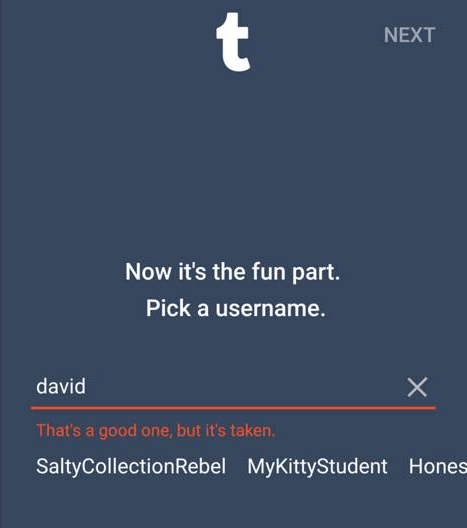
Content designers contribute to the strategic and operational layers of product development
They help teams frame problems before any design work begins, clarifying user goals, constraints, and the information people need at each step of a journey.
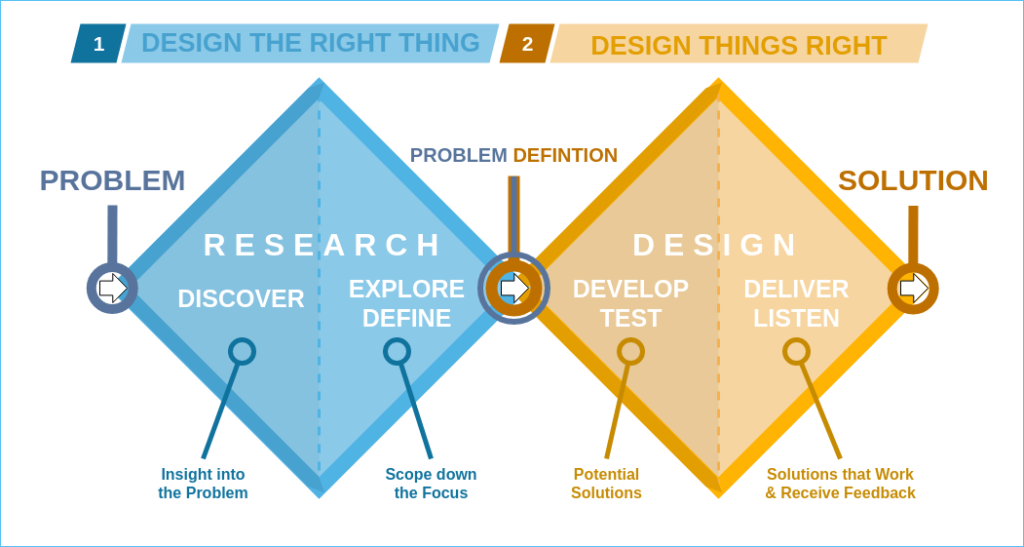
Content designers create flows and interactions
Ensuring language supports the underlying logic of the product. They define structure: content types, patterns, naming systems, and rules that keep products consistent even as they grow.
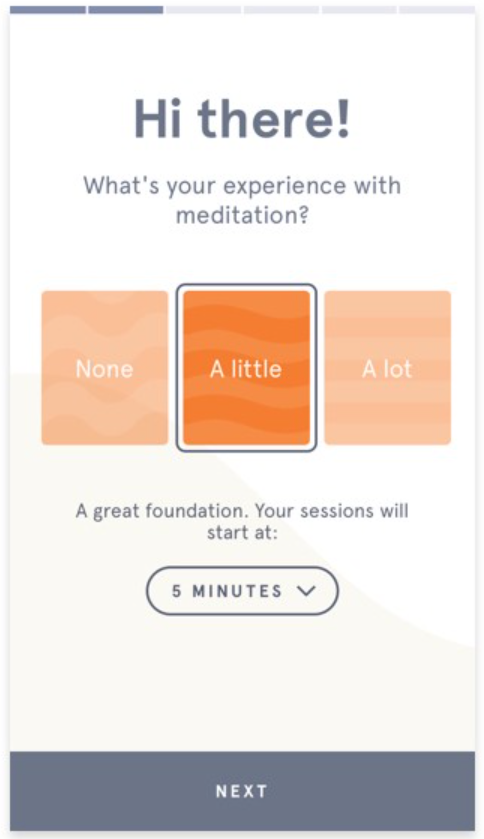
Content designers measure and test impact
Teams expect content designers to define what “success” looks like for content, interpret qualitative and quantitative data, and use evidence to refine flows and patterns. This evaluation mindset supports better decision-making and helps teams maintain quality across complex systems.
Content designers work with Large Language Models
The technical side of the role has deepened too. Many content designers now work with content models, structured fields, and logic that power dynamic experiences and AI-assisted content.
This requires close collaboration with engineers, product managers, and design system teams. The goal is to create content structures that scale, whether they appear in UI components, help content, onboarding, or model outputs.
That, of course, means content designers sit in different places according to their organization:
- Some teams embed them in product groups alongside designers and product managers.
- Others place them within design orgs where they operate as shared specialists across multiple squads.
- Some larger companies adopt hybrid structures, with content designers contributing to both strategic content systems and day-to-day product work
Regardless of the reporting line, the expectation is the same: content designers operate as product thinkers who manage complex content environments.
Is a content designer a UX writer?
Some companies continue to use “UX writer”. Sometimes this is synonymous with “content designer”, and the roles are the same. However, some are a little bit more constrained in their scope. These roles often emphasise rewriting UI text, supporting short-term feature work, or writing marketing-style microcopy.
To identify these positions, look for signals such as minimal collaboration with engineering, no mention of content systems or modelling, and task-based responsibilities rather than problem framing or user journey work. These jobs aren’t inherently worse, but they reflect an older version of the discipline and may not offer the scope many designers now expect. It really depends.
Some companies like Apple use the term “UX Writer”, and those roles are completely synonymous with content designer. It really just depends.
The skills employers expect from content designers
Many people still assume content design is mostly about writing well. Writing remains essential, it’s just not the entire job anymore. Employers look for candidates who can work across systems, interpret evidence, collaborate with technical teams, and design content that scales (often including AI).
The skills below reflect how the discipline has matured and what hiring managers now expect from job-ready candidates in 2026.
UX writing fundamentals
Clear, purposeful language is still the foundation of the role. Employers expect content designers to understand voice, tone, clarity, user intent, and how to structure information within individual UI components.
This includes writing for flows rather than isolated screens, anticipating confusion, and supporting decision-making. Strong fundamentals show that a designer can communicate clearly, but they are only the starting point.
With so many companies now using AI to write content, it also helps to differentiate and write in a way that stands out. If you can both craft a great user experience and follow UX design principles, your content design skills will be hard to match.
Research and testing
Content decisions must be supported by evidence. Employers expect content designers to understand both qualitative and quantitative testing methods, from usability testing and conversation reviews to metrics, logs, and behavioural data.
Designers need to interpret findings, identify patterns, and translate insights into actionable content improvements.
Systems thinking
Modern products are complex, and content must work across multiple touchpoints. Systems thinking allows content designers to see how their decisions affect onboarding, navigation, support content, search, and localisation.
Employers look for candidates who can identify dependencies, simplify complexity, and design patterns that hold up across a full ecosystem. This mindset supports scalability and reduces rework later in the product lifecycle.
Content engineering
Content engineering combines content and the technical infrastructure that helps deliver it. Employers expect content designers to understand how information is organised: fields, types, relationships, and rules. Modelling content helps teams reuse information consistently and ensures that content works in dynamic environments.
AI-assisted content design
AI has changed how teams generate, test, and maintain content. Content designers now guide model behaviour by defining prompts, constraints, tone rules, and evaluation criteria. They need to understand how AI fits into the tech stack and how to design workflows that keep output consistent and safe.
Employers want designers who can work with AI as a tool, as something that amplifies structured thinking and evaluation.
Technical fluency
Technical literacy helps content designers work more effectively with engineering and product teams. You don’t need to be a developer, but you should understand front-end basics, JSON and YAML, how APIs deliver content, and how version control supports cross-functional workflows.
It isn’t out of the question that you might need to work with developers to extract a bunch of strings, for example. Having some technical fluency helps. This fluency reduces friction and makes designers more capable of planning content work that aligns with technical constraints and real-world implementation.
Influence and cross-functional communication
Content designers operate within multi-disciplinary teams. Employers want designers who can frame problems, negotiate scope, align stakeholders, and communicate decisions clearly.
Designers who can build trust and collaborate effectively are far more successful than those who can’t.
How to build content design skills
If you’re coming to content design from another discipline, or you’re figuring out what kind of career you want, these skills can feel overwhelming. But – they are learnable! After all, everyone has to learn something for the first time.
The path to becoming a content designer in 2026 is much easier to understand when broken into deliberate stages. The goal is not to master everything at once, but to build a layered foundation that reflects how the role works.
We should also point out that if you already work in copywriting, marketing, journalism, and many other disciplines, you already know quite a lot about how products operate. You’ll bring valued experience in a way that can help set you apart.
Start with UX writing basics
Begin by learning the fundamentals: writing for flows rather than isolated screens, shaping clarity through structure, and understanding common UI patterns such as error messages, confirmations, and navigation cues.
This includes understanding user intent at each step of a journey and learning how to support decision-making. Strong UX writing skills give you the baseline craft needed to contribute meaningfully to design work.
Learn how product teams operate
Content designers work within product environments, so understanding how those environments function is critical. Learn how roadmaps are created, how sprints work, and how design and engineering make trade-offs.
Familiarise yourself with the typical responsibilities of product managers, researchers, and designers. This knowledge helps you identify where content design fits and how to contribute at the right moments.
Build technical foundations
Technical fluency is increasingly necessary. Start by learning front-end basics—how interfaces are built and how content is implemented. Explore CMS workflows, structured fields, and how content moves from storage to display.
Learn the basics of JSON and YAML, since these formats appear everywhere in modern products. This foundation helps you communicate effectively with engineers and understand real constraints.
Learn AI evaluation and prompt strategy
AI-assisted content is now part of the job. Learn how Large Language Models work and the architecture that powers them. Learn how prompts and constraints shape model outputs, how to evaluate quality, and how to identify failure cases.
Understanding how AI fits into a product’s tech stack andhelps you design language systems that scale and remain safe, consistent, and predictable.
Practice research and evaluation
Research literacy allows you to make evidence-based decisions. Conduct usability reviews, run small content tests, and audit real product interactions.
Analyse onboarding flows or support conversations to understand how people interpret content in the wild. Practising both qualitative and quantitative evaluation gives you a more accurate perspective on how content performs.
Develop a habit of documenting decisions
Documentation is one of the most overlooked skills in content design. Capture your reasoning, options considered, assumptions, and constraints. Document patterns and guidelines, and record how user insights shaped your decisions. This habit makes your work repeatable and gives your portfolio the narrative depth employers now expect.
A tailored path for writers entering the field
If you come from a writing-heavy background like journalism, copywriting, or tech writing, the biggest gaps will be systems thinking, research, and technical understanding. Focus your early learning on structured content, content modelling, problem framing, and how product teams build and ship features.
This shift from “writing words” to “designing content systems” is the most important transition for writers moving into content design in 2026.
How to get experience without a formal job
One of the biggest challenges for anyone in any field is to get experience without a job.
Yes, this is an issue. Fortunately, the work of content design lends itself well to self-directed projects, including those that go beyond the surface-level writing and demonstrate real problem solving. The aim is not to simulate a job perfectly, but to show how you think, structure, and evaluate content in realistic product scenarios.
So, with that in mind, we have some suggestions.
Redesign a real product flow and document your reasoning
Choose a product you already use, like a banking, food delivery, or productivity tools, and identify a screen or a few screens that feel confusing or inefficient.
Map the current experience, highlight pain points, and redesign the flow with a clear problem statement. Show your assumptions, alternative paths you considered, and the logic behind each decision. This turns a simple rewrite into a systems-thinking case study.
Sometimes it can be tempting to take a screen and just rewrite it for tone or voice. Avoid this temptation! It’s fine to change things, but UX is all about reasoning and decisions. Why are you doing what you’re doing? What’s the reasoning for it, and is that reason based in user feedback or needs?
Partner with junior designers or dev students
Design and development students often need collaborators for their capstone or portfolio projects. Partnering with them allows you to practise product-style collaboration while producing work that feels closer to a real environment. You get experience with handoff, iteration, and multi-disciplinary decision-making, and you both benefit from a richer final project.
Practice with challenges
If you’re just getting started, we’d recommend the Daily UX Writing Challenge. This can be a fantastic way of getting some free, regular practice in. You can even share your output on LinkedIn and get feedback.
Create structured content for a fictional product
Structured content is increasingly central to content design, and you don’t need access to a live CMS to practise it. Invent a fictional product like a marketplace, a booking platform, a health app, and design meaningful content types. Define fields, relationships, rules, and sample entries.
Think about the “metadata” that will be connected to your fields. What information does each field need? Explain how this structure supports reuse, localisation, AI-assisted output, or conditional rendering. This kind of project shows maturity and reflects real industry needs.
Build an evaluation framework for AI outputs
AI literacy has become a core expectation, and you can demonstrate it without working inside an AI team. Pick a use case and design an evaluation framework.
Define criteria, test with multiple prompts, identify failure patterns, and adjust constraints to improve results. Document what you learned. This shows employers you can handle AI as a systematic design problem, not a novelty.
Redesign onboarding or support content for a nonprofit
Many small organisations struggle with clear onboarding flows, donation processes, or support content. Volunteering your time gives you real constraints, real stakeholders, and real user needs to work with. These projects often produce strong case studies because they require problem framing, prioritisation, and cross-functional communication.
These are skills employers value highly!
In 2026, employers want to see how you operate within complexity, how you design systems, and how you use evidence to guide decisions. Self-directed projects can show all of this when they are structured well and documented carefully.
How content design hiring actually works in 2026
While job titles still vary, the expectations underneath them are remarkably consistent. Understanding those expectations is essential if you want to position yourself realistically.
Recruiters scan for signals
Recruiters scan for signals of maturity:
- Can this person frame complex problems?
- Do they think in systems rather than screens?
- Can they explain decisions clearly?
- Do they show evidence of scale, structure, or governance?
Visual polish and clever copy matter far less than clarity of thinking. Portfolios that surface frameworks, decision logic, and trade-offs move forward faster because they reduce risk for the hiring team.
Evaluations test ambiguity
Candidates are less likely now to be asked to “improve this copy”, or to do simple exercises like “replace this word with a simpler one”. Instead, they’re asked to identify or work on:
- Design multi-step or multi-surface flows
- Define content principles or patterns
- Evaluate AI output and propose improvements
- Explain how they would measure quality or success
These exercises are deliberately ambiguous. Hiring managers are not testing whether you get the “right” answer, they’re testing how you reason, prioritise, and communicate under uncertainty.
As for impact, hiring managers want candidates who can talk about:
- Reduced user confusion
- Improved task success
- Increased consistency across systems
- Better AI reliability
- Clearer organisational decision-making
Describing what you wrote is, quite frankly, not enough. You need to explain why it mattered, how it scaled, and how it influenced product direction.
Startups and smaller teams still value broad capability. These roles often combine UX writing, content strategy, light research, and operational work. However, even here, expectations have risen.
What content designers should learn about AI
Teams expect designers to understand how AI behaves, how to guide it, and how to evaluate it with the same rigour used for traditional content. AI literacy has become a common requirement, similar to how understanding design systems or usability once shifted from “nice to have” to “standard expectation.”
To work effectively in 2026, content designers need a grounded, practical understanding of how AI fits into real product environments.
Understand how LLMs slot into a tech stack
AI sits within a broader architecture that includes data sources, APIs, business rules, and front-end interfaces. Content designers need to understand where model behaviour begins and ends, how user inputs flow into the system, and how model outputs interact with product logic.
This technical awareness helps designers identify risks, anticipate edge cases, and collaborate effectively with engineers. It also clarifies what a model can and cannot solve, preventing misplaced expectations.
Understand evaluation: quality, consistency, and constraints
Evaluation is the core of AI-assisted content design. Models produce variable output, so designers must define what good looks like and test against that standard. This includes setting criteria for clarity, accuracy, tone, and safety; identifying failure cases; and refining prompts or constraints to improve consistency.
Quality assurance for AI output has become as important as writing the content yourself.
Learn prompt and context engineering fundamentals
Context includes design systems, content patterns, schemas, taxonomies, product rules, brand guidelines, safety constraints, and user state. Content designers increasingly work upstream of prompts, deciding what knowledge is available to the model, how it is structured, and how it should be interpreted.
Content designers should focus on supplying AI systems with structured inputs: content models, component rules, design system language, naming conventions, and reusable patterns. This reduces reliance on free-form generation and improves consistency across surfaces.
- Setting boundaries, constraints, and guardrails
Establish tone rules, safety constraints, refusal conditions, and escalation paths. These constraints should live in shared systems. - Using examples as training signals, not decoration
Examples should demonstrate acceptable structure, tone, and behaviour. They work best when paired with clearly defined fields and rules rather than as isolated snippets of text. - Anticipating edge cases and failure modes
Design for ambiguity, partial input, conflicting data, and unsafe requests. Context engineering helps the system recognise when not to answer, when to fall back, and when to defer to deterministic logic. - Iterating based on evaluation, not intuition
Test outputs against defined quality criteria. Adjust context including content sources, structure, rules, and so on, before reaching for more complex prompts.
Learn to structure data for machine assistance
Designers need to understand how content models, fields, taxonomies, and rules shape outputs. This includes defining fields that models can use reliably, creating constraints that guide tone or format, designing reusable patterns, structuring content so models can assemble variations safely
Know when AI is the wrong solution
One of the most overlooked skills is being able to say “AI is not appropriate here.” AI should not replace clear logic, stable rules, or critical information where precision is essential. Content designers must recognise when deterministic content, simple conditional logic, or a static pattern will outperform a model.
Not to mention, your basic writing skills just serve as your bedrock. The only reason AI helps you is if you know what “good” and “bad” writing is in the first place!
What career growth looks like after you get in
As the discipline has expanded into systems, AI, operations, and strategy, the opportunities for progression have grown with it. New entrants often focus on breaking into the field, but understanding what comes next helps you choose the right skills to develop and the right roles to pursue.
Senior content designers lead complex product work, operate with greater autonomy, collaborate closely with product and engineering partners, and influence direction across multiple teams. They’re expected to handle ambiguity, guide problem framing, mentor junior colleagues, and contribute to content strategy at scale.
As products have become more complex, many teams now hire specialists to build and maintain the systems that support consistent, scalable content. This includes design system content, content models, taxonomy, structured content, patterns, and governance. Systems specialists shape how content functions across entire ecosystems. This role appeals to designers who enjoy structure, logic, IA, and long-term maintainability.
Some designers move further into the technical space, working alongside engineering teams on content tooling, dynamic content delivery, integrations, and automation. These roles often involve schema design, API workflows, documentation systems, and the technical implementation of content models. Designers who like systems, tooling, and structured content often find this path rewarding.
Content leadership and governance
Leadership roles now require more than managing a writing team. Leaders in 2026 drive strategic influence, long-term planning, measurement frameworks, cross-functional alignment, and organisational change. They set the vision for how content shapes the product and ensure teams have the systems, skills, and processes they need to deliver at scale. Leadership fits designers who enjoy strategy, coaching, and shaping broader organisational impact.
Content operations has become a critical discipline in mature organisations. Ops specialists maintain governance frameworks, documentation, content quality standards, workflow tooling, localisation processes, and metrics. They help teams work more efficiently and scale content without chaos. This path suits designers who excel at structure, clarity, and system-level optimisation.
These paths matter because they show that content design isn’t a dead-end craft. The field now includes specialised, technical, and strategic opportunities that didn’t exist even a few years ago. New content designers entering the discipline in 2026 can build careers that stretch far beyond writing microcopy—shaping systems, influencing product direction, and leading the evolution of language within digital products.
So, should you still be a content designer in 2026?
Content design in 2026 is larger, more technical, and more strategically embedded in product development than ever before. The role has moved beyond writing interface text and now spans systems thinking, structured content, AI evaluation, and cross-functional influence. For newcomers, this shift can feel daunting, but it also creates clearer career paths, stronger long-term opportunities, and more ways to contribute meaningfully to how products work.
Breaking into the field requires a deliberate approach: building solid writing fundamentals, understanding how product teams operate, developing technical fluency, and creating portfolio projects that demonstrate reasoning rather than surface-level edits. It also requires learning how AI fits into modern products: how to guide it, evaluate it, and design the structures that support it.
For anyone entering content design today, you’re coming at an exciting time. The field sits at the intersection of language, design, technology, and AI, and it’s an area that will only continue to grow.
With the right foundations and a portfolio that shows how you think, you can build a meaningful, adaptable career in a discipline that plays a central role in shaping modern products.

Learn UX writing skills
Fundamentals of UX Writing
Learn real-world UX writing skills, get personal feedback and a UX writing certification, and build the craft and judgment needed to define, critique, and improve UI content.